Last Updated: October 23, 2026
Quick Summary
An indoor golf simulator replaces a range session by giving you tracked data on every swing instead of just ball flight. You can book an hourly bay, set up a home launch monitor, join a league, or take data-driven coaching. Most serious players combine two or three of these rather than dropping the range entirely.
- A simulator measures clubhead speed, ball speed, launch angle, spin rate, and carry distance on every swing.
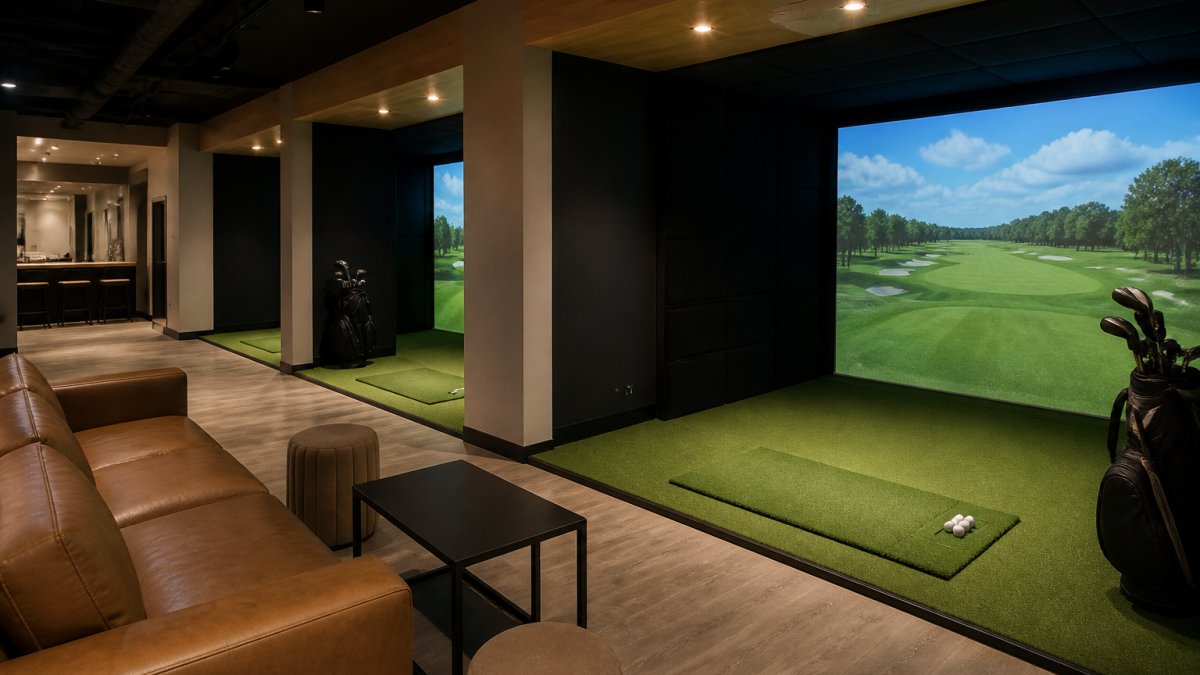
- Edge Golf in Edgewater, NJ offers six Golfzon simulator bays with automatic hands-free ball feed.
- Set aside fifteen minutes of every session for putts inside ten feet.
- A home launch monitor rewards frequent, short sessions but rarely makes sense for casual players.
- VIP members earn 1% back on every booking and get priority scheduling.
Table of Contents
- Why Golfers Are Trading the Driving Range for an Indoor Golf Simulator
- Golf Simulator vs Driving Range: What Each One Actually Gives You
- Golf Simulator Cost Per Hour NJ: What You're Paying For
- Indoor Golf Lessons Edgewater NJ: Coaching That Uses the Data
- Indoor Golf Putting Practice: The Part Most Simulators Skip
- Five Indoor Golf Simulator Alternatives to a Standard Range Session
- How to Choose the Right Alternative for Your Game
- Conclusion
- Frequently Asked Questions
Why Golfers Are Trading the Driving Range for an Indoor Golf Simulator
An indoor golf simulator is a technology-driven practice setup that projects a virtual course onto a screen while tracking ball flight, club path, and launch data in real time. At Edge Golf in Edgewater, NJ, we've watched this shift firsthand: golfers who once spent winter months hitting balls into a cold wind now book bays year-round. The reason isn't novelty. It's feedback.
A driving range shows you where the ball lands. A simulator tells you why. That distinction changes how practice works, and it's why so many players in the New York metro area are rethinking the traditional range session. Below, we'll break down what each option actually delivers, what a session costs, and which alternatives fit your game.
Golf Simulator vs Driving Range: What Each One Actually Gives You
The golf simulator vs driving range comparison comes down to feedback versus volume. A range lets you hit more balls; a simulator tells you more about each one. Neither is strictly better, but they serve different goals.
Where the Range Wins
Real ball flight, real wind, real turf. You see the full arc of a shot with your own eyes, and that visual feedback builds feel in a way a screen can't fully replicate. The range also wins on cost per ball and accessibility: most public facilities require no booking, and you can show up in jeans and sneakers. For a player working on tempo or simply unwinding after work, that low-friction format is hard to beat.
Where the Simulator Wins
Precision. A quality simulator measures clubhead speed, ball speed, launch angle, spin rate, and carry distance on every swing. That data turns practice into something measurable. You can test a swing change and see the numbers move within a single session. Weather stops mattering, and a session fits into a lunch break. For anyone serious about improvement, the feedback loop is the whole point.
Golf Simulator Cost Per Hour NJ: What You're Paying For
Golf simulator cost per hour in NJ varies widely by facility, bay type, and time of day. Rather than quote figures we can't verify, here's how to think about what drives the price: bay technology, room privacy, coaching add-ons, and peak versus off-peak booking. Premium facilities charge more because they bundle tracking precision, course variety, and dedicated space.
The honest comparison isn't simulator hour versus range bucket. It's simulator hour versus range bucket plus a lesson plus the months you lose to winter. When you frame it that way, the math shifts. For current rates at our Edgewater facility, check our booking page; pricing depends on bay type, session length, and membership tier.
| Option | What You Get | Best For | Cost Driver |
|---|---|---|---|
| Driving range | High ball volume, outdoor flight | Tempo work, casual practice | Bucket size |
| Hourly simulator bay | Tracked data, virtual courses | Skill measurement, winter play | Bay type, time of day |
| Home launch monitor | Personal data, no travel | Frequent solo practice | Equipment purchase |
| Simulator league | Competition, social play | Motivated competitors | Season fee |
| Corporate event | Private space, group format | Team building | Group size, catering |
Indoor Golf Lessons Edgewater NJ: Coaching That Uses the Data
Indoor golf lessons in Edgewater NJ look different from a traditional range lesson because the instructor has numbers on screen. Instead of eyeballing your swing, a PGA-certified coach can point to a specific spin rate or attack angle and connect it to ball flight. That shortens the guesswork.
At Edge Golf, our PGA-certified instructors use high-precision tracking to build a baseline, then measure progress against it session by session. The data doesn't replace coaching; it gives the coach something concrete to work with. A common mistake is treating simulator numbers as a scoreboard rather than a diagnostic tool. The numbers are a map, not a grade.
PGA of America coaching resources
Indoor Golf Putting Practice: The Part Most Simulators Skip
Most simulator sessions are driver-heavy. Golfers love watching a long ball fly down a virtual fairway, so putting gets neglected. That's a mistake, because putting is where scoring actually happens. Indoor golf putting practice deserves its own block of time, not a rushed five minutes at the end.
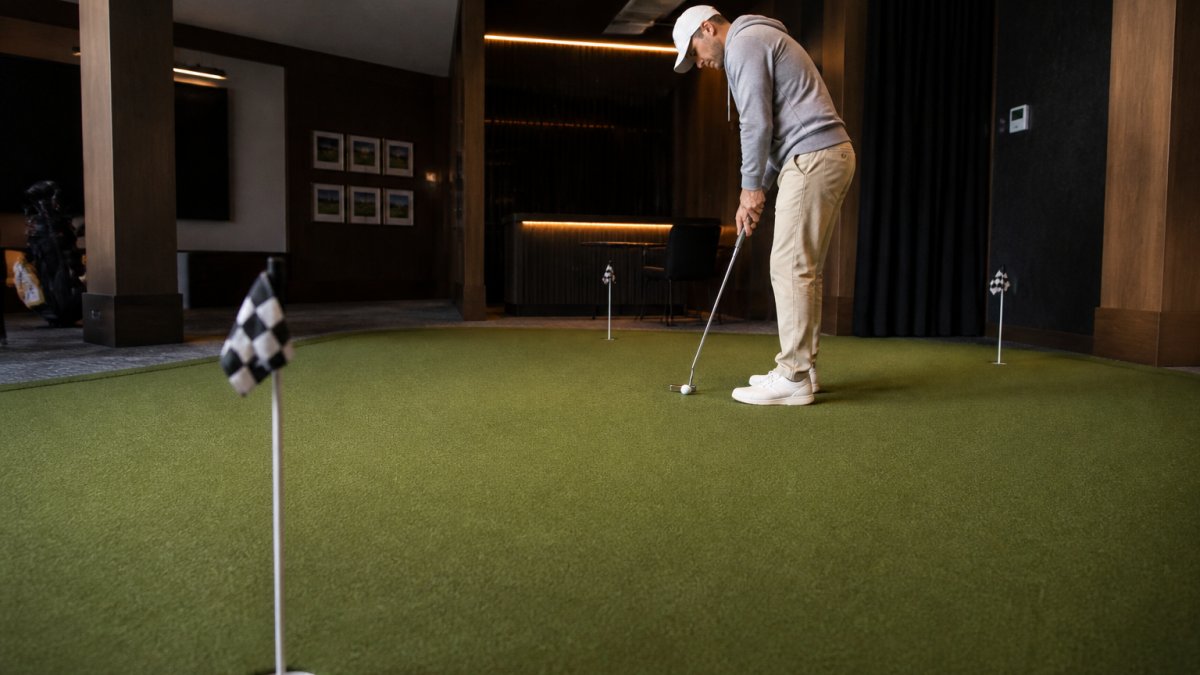
A dedicated putting studio changes this. At Edge Golf, our PuttView putting studio projects alignment and break lines directly onto the green, so you can practice reading slope and starting line with visual confirmation. It's the closest thing to practicing green-reading indoors. Set aside fifteen minutes of every session for putts inside ten feet. That's where strokes disappear.
Five Indoor Golf Simulator Alternatives to a Standard Range Session
There's no single replacement for the range. There are several, and the right one depends on how you practice and what you want to improve. Here are the formats worth considering.
Hourly Bay Rental at a Dedicated Simulator Facility
This is the most direct alternative. You book a bay by the hour and get tracked data, virtual courses, and a controlled environment. At Edge Golf, our six Golfzon simulator bays offer automatic hands-free ball feed and true-to-course lies, so you can work through a full round or a focused practice block without setup friction. It's the easiest way to replace a range session without buying equipment.
A Home Launch Monitor Setup
For golfers who practice often and have space, a home launch monitor is the long game. Brands like SkyTrak+, Garmin, and FlightScope offer consumer options, and retailers such as PlayBetter's golf simulator collection list these alongside enclosures and projectors. The tradeoff is upfront cost and space. A home setup rewards frequent, short sessions; it rarely makes sense for casual players.
Simulator Leagues and Corporate Events
Competition sharpens practice. Simulator leagues add a social, scored format that keeps you coming back, and corporate events turn the bay into a venue for client entertainment or team building. Both formats work because they give practice a purpose beyond repetition.
Structured Practice Blocks
Instead of hitting a bucket, build a session around a single goal: ten drivers working on one swing thought, then ten approach shots, then putting. The simulator's data keeps you honest about whether the change actually took.
Coaching Packages
A lesson package pairs data with expert eyes. This is the highest-use alternative for players stuck at a plateau, because a coach spots the one flaw that repetition alone won't fix.
| Alternative | Setup Effort | Best For | Watch Out For |
|---|---|---|---|
| Hourly bay rental | None | Most golfers | Peak-hour booking |
| Home launch monitor | High | Frequent solo practice | Upfront cost, space |
| Leagues and events | None | Social players | Fixed schedule |
| Structured practice | Low | Focused improvers | Requires discipline |
| Coaching packages | Low | Plateaued players | Commit to the plan |
How to Choose the Right Alternative for Your Game
Start with your goal, not the format. If you want to measure and improve, choose a tracked environment. If you want volume and fresh air, keep the range in rotation. If you want competition, join a league. Most serious players end up combining two or three of these rather than replacing the range outright.
Ask yourself three questions: How often will I practice? What single shot costs me the most strokes? Do I want data or feel? Your answers point to the format. And if you're near Edgewater, a facility that combines simulator bays, a putting studio, and PGA-certified coaching lets you cover several formats in one visit.
USGA Rules of Golf and handicap resources
Conclusion
The driving range isn't obsolete, but it's no longer the only option for golfers who want to improve year-round. Whether you choose hourly bay rental, a home setup, a league, or coaching, the goal is the same: practice with feedback instead of guessing. At Edge Golf in Edgewater, NJ, we built our facility around that idea, with six Golfzon simulator bays, a PuttView putting studio, and PGA-certified instructors who use high-precision tracking to make progress measurable. VIP members also earn 1% back on every booking and get priority scheduling. Book a bay and see what your swing looks like when the numbers are on your side.
Frequently Asked Questions
Is an indoor golf simulator as good as a driving range for practice?
For feedback, often better. An indoor golf simulator measures clubhead speed, ball speed, launch angle, spin rate, and carry distance on every shot, which a driving range cannot show you. What the range offers is real ball flight and outdoor conditions. Many golfers use both: the simulator for structured practice and data, the range for seeing actual trajectory. If your goal is measurable improvement rather than volume of swings, the simulator gives you more to work with per hour.
Can you practice every club on an indoor golf simulator?
Yes, including driver. Bay ceilings and screen distance determine how comfortably you can hit longer clubs, so ask about clearance before booking. At a dedicated facility with full swing bays, you can work through wedges, irons, hybrids, and driver in the same session. Some venues also offer club fitting, which lets you compare your current clubs against alternatives using the same tracking data. Confirm bay dimensions if you have a steep swing or play extra-long shafts.
How much does it cost to use an indoor golf simulator near Edgewater?
Pricing varies by venue, time of day, and whether you book a shared bay or a private room. Rates are typically quoted per hour per bay rather than per person, which makes group sessions cheaper per golfer. Membership and league pricing also differ from walk-in rates. Because costs shift with demand and season, check the facility's website or call for current rates rather than relying on older figures. Compare the hourly rate against what you would spend on range balls plus travel time.
What should I look for when choosing an indoor golf simulator venue?
Start with the tracking technology: launch monitors that measure spin and launch angle give you useful practice data, while basic setups mostly just show ball flight. Then check bay count and whether private rooms are available if you want to practice without an audience. Putting matters too, since most strokes in a round happen on the green, so a dedicated putting studio is a real advantage. Finally, look for PGA-certified instruction and a booking system that fits your schedule.
Is indoor golf useful for beginners?
It removes most of the reasons beginners avoid the course. There is no dress code pressure, no waiting behind faster groups, and no lost balls to pay for. A simulator shows you immediately what your swing produced, which speeds up learning compared with guessing at a range. Lessons on a simulator add structure: an instructor can pause the session, walk you through the numbers, and have you repeat the corrected motion right away. Many beginners start with a single lesson before committing to a membership.
