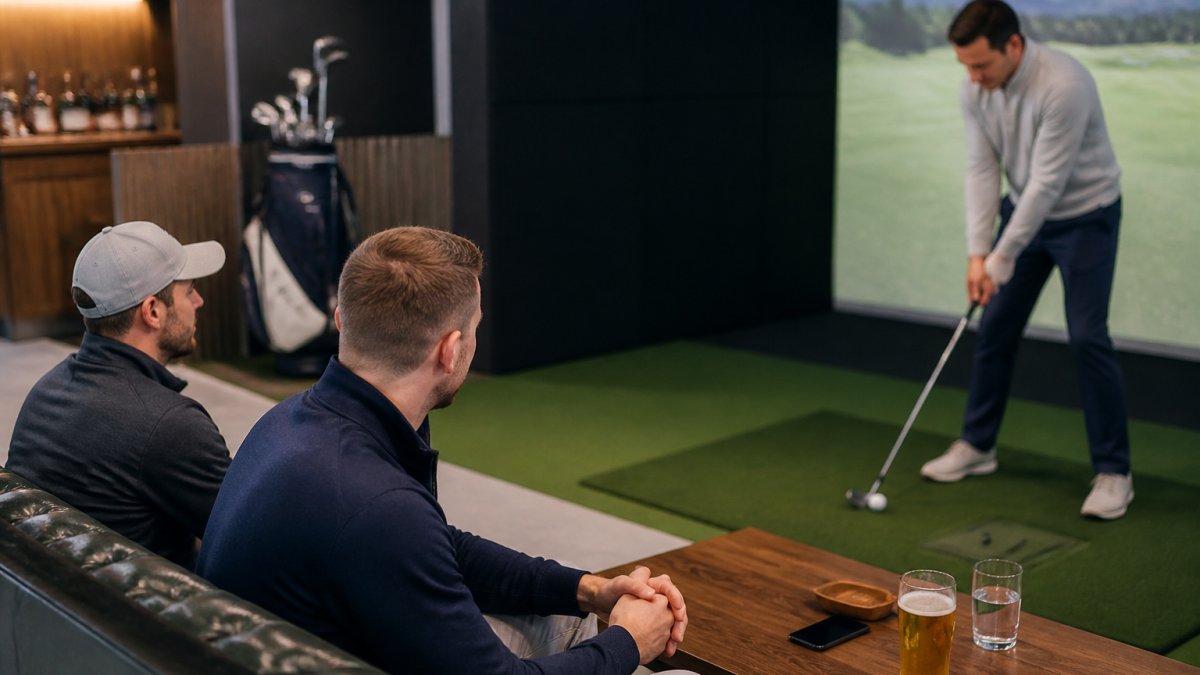
Table of Contents
- Why Indoor Golf Feels Intimidating (And Why It Usually Isn't)
- First Time Golf Simulator Tips for Nervous Beginners
- What to Bring to an Indoor Golf Simulator (And What You Can Leave at Home)
- How Long to Book a Golf Simulator for Your First Session
- Indoor Golf Simulator Etiquette Every Newcomer Should Know
- How Indoor Golf Helps Beginners Improve Faster Than an Outdoor Range
- Frequently Asked Questions
Last Updated: October 21, 2026
Why Indoor Golf Feels Intimidating (And Why It Usually Isn't)
Walking into a golf facility for the first time can feel like showing up to a test you didn't study for. That fear is common, but it rarely matches reality. Indoor golf is one of the most beginner-friendly ways to try the sport, and at Edge Golf in Edgewater, NJ, first-timers are a normal part of the daily crowd.
Here's the truth most guides skip: the intimidation comes from imagination, not from the simulator bay. You picture hushed silence, scratch golfers judging your swing, and screens full of data you can't read. What actually happens is far calmer.
What Actually Happens on Your First Visit
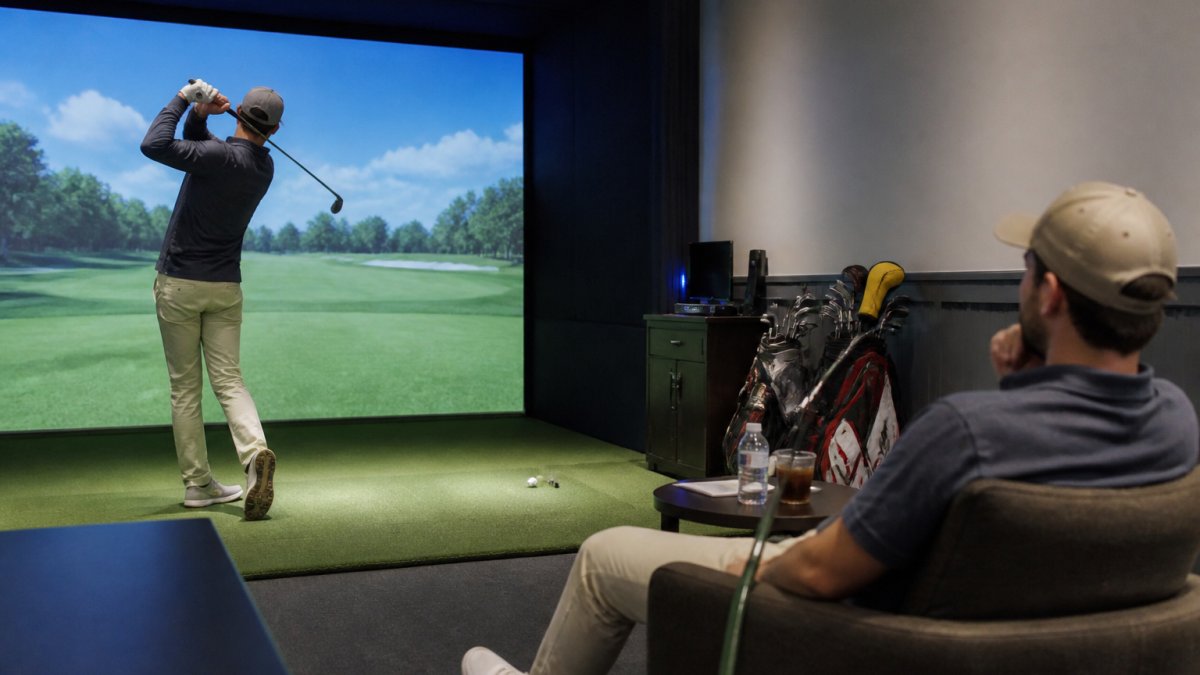
You check in, get a quick rundown of the bay, and hit your first ball within minutes. The screen shows a course. The ball flies. A number pops up telling you how far it went.
That's it. No crowd. No pressure. Staff at most indoor facilities, including ours, expect beginners and plan for them. The automatic ball feed means you don't even bend down between shots.
A few things ease the nerves fast:
- You play in a private bay, not in front of a gallery
- You can pause, ask questions, and reset whenever you want
- Nobody is watching your swing except the people you brought
The first ten minutes feel awkward. The next hour feels fun. That's the pattern nearly every new player follows.
First Time Golf Simulator Tips for Nervous Beginners
The best first-time golf simulator tips are simple: swing easy, aim at the middle of the screen, and ignore the numbers for your first few shots. Speed comes later. Contact comes first.
Think of your opening session as a test drive, not a performance. Here's how to settle in:
- Start with a short iron. A 7-iron or wedge is easier to control than a driver.
- Swing at 70% effort. Most beginners swing too hard and lose accuracy.
- Watch the ball flight, not the data. The screen shows where the ball lands, which teaches you more than any number.
- Give yourself permission to miss. Everyone hits bad shots indoors. The screen doesn't care.
A common mistake is treating the simulator like a video game and trying to crush every shot. In practice, smooth swings produce better results and better feedback. The tracking reads your club and ball, so an easy swing still gives you useful data.
If you're coming from a driving range, expect a different feel. The bay is enclosed, the lighting is even, and the ball reacts to a screen rather than open air. Give it twenty shots before you decide you don't like it.
What to Bring to an Indoor Golf Simulator (And What You Can Leave at Home)
What you bring to an indoor golf simulator is minimal: comfortable clothes, athletic shoes, and your clubs if you have them. Everything else is optional. This is one of the easiest sports to show up for unprepared.
Bring these:
- Athletic shoes with grip (running shoes work fine)
- Comfortable pants or shorts you can swing in
- Your own clubs, if you own a set
- A water bottle
Leave these at home:
- Golf spikes (most indoor bays don't allow them)
- A full golf bag if you're only trying it out
- Any worry about dress codes
If you don't own clubs, ask ahead. Many indoor facilities, Edge Golf included, can set you up so you're not buying gear before you know you like the sport. That's a real advantage over an outdoor course, where showing up without clubs is a non-starter.
How Long to Book a Golf Simulator for Your First Session
Book 60 to 90 minutes for a first indoor golf session. That's long enough to warm up, play a few holes, and get comfortable without wearing yourself out. Anything shorter feels rushed; anything longer tires out a new swing.
Here's a simple way to plan it:
| Session Length | Best For | What to Expect |
|---|---|---|
| 30 minutes | Quick test drive | Warm-up and a handful of shots |
| 60 minutes | First-timers | Warm-up, practice, 3-4 holes |
| 90 minutes | Beginners with a friend | Full 9 holes at an easy pace |
| 2 hours | Small groups | Rotation play, plenty of breaks |
A first-timer swinging for two hours straight will feel it in the back and shoulders the next day. Sixty to ninety minutes hits the sweet spot.
If you're booking with friends, add time per person. Two beginners sharing a bay for an hour each get about thirty minutes of actual swings.
Indoor Golf Simulator Etiquette Every Newcomer Should Know
Indoor golf simulator etiquette comes down to three things: arrive on time, keep noise reasonable, and leave the bay the way you found it. None of it is complicated, and staff will guide you if you're unsure.
The unwritten rules that matter most:
- Show up a few minutes early. Check-in and bay setup take time.
- Keep your voice down near other bays. Sound carries in enclosed spaces.
- Don't walk into another group's bay. Wait your turn or ask staff.
- Wipe down clubs and shoes if they're muddy. It protects the mats and screens.
- Ask before adjusting the simulator settings. Staff can help faster.
A common worry is doing something wrong in front of experienced players. In practice, seasoned golfers are focused on their own screens. Nobody is grading your etiquette. Follow the basics and you'll blend right in.
How Indoor Golf Helps Beginners Improve Faster Than an Outdoor Range
Indoor golf helps beginners improve faster because every shot gives instant feedback. The screen shows distance, direction, and ball flight in seconds. At an outdoor range, you watch a ball disappear and guess what happened.
That feedback loop changes how fast you learn. You hit a shot, see the result, adjust, and hit again. Repeat that for an hour and patterns emerge.
A few reasons indoor practice speeds up progress:
- Instant data. You see exactly where the ball went and why.
- Year-round practice. Weather never cancels a session, which matters in the Northeast.
- Coaching on demand. PGA-certified instructors can watch your swing and correct it in real time.
- Consistent conditions. No wind, no uneven lies, no distractions.
For beginners in the New York City metro area, the weather point is huge. Winter shuts down outdoor ranges for months. An indoor bay keeps your swing alive through the cold season.
At Edge Golf, our six Golfzon simulator bays and PuttView putting studio give beginners a place to build a repeatable swing with real feedback. Our PGA-certified instructors work with new players regularly, and the high-precision tracking shows progress you can actually see. If you're searching for indoor golf near me in the Edgewater area, this is the kind of setup to look for.
The sport rewards repetition. Indoor golf makes repetition easy.
Frequently Asked Questions
Is indoor golf intimidating for beginners?
It rarely is once you're inside. Indoor golf venues attract a mix of skill levels, and simulator bays are semi-private, so nobody is watching you from behind. At a place like Edge Golf in Edgewater, NJ, the PGA-certified instructors work with plenty of first-timers. The screens, the tracking technology, and the hands-free ball feed do most of the work, so you can focus on swinging rather than feeling watched. Most beginners say the nerves fade within the first ten minutes.
Do you need to know how to play golf before using a simulator?
No. A simulator is arguably one of the easiest places to learn because the screen shows your ball flight instantly and the bay is enclosed. Staff can walk you through setup, and many facilities offer clubs if you don't own a set. Book a shorter session, tell the staff it's your first time, and treat it as practice rather than a test. Indoor golf rewards curiosity far more than prior experience.
What should I bring to my first indoor golf session?
Wear athletic shoes and comfortable clothing you can rotate in. Bring your own clubs if you have them, but call ahead to confirm loaner clubs are available if you don't. A water bottle helps, and most venues allow your own gloves. Leave the spikes and outdoor gear at home. If you're unsure about anything, ask when booking. Staff at indoor golf facilities are used to first-timers and will tell you exactly what's provided.
How long should a beginner book a golf simulator for?
Sixty to ninety minutes is the sweet spot for a first session. That's enough time to warm up, get comfortable with the screen and tracking, and hit a decent number of shots without your swing falling apart from fatigue. Booking two hours on day one often backfires because beginners tire quickly. If you're sharing the bay with friends, plan on 90 minutes to two hours so everyone gets enough turns.
Golf doesn't have to feel like a closed club. The challenge is finding a place where beginners are welcome and progress is visible. Edge Golf in Edgewater, NJ, was built for exactly that: six Golfzon simulator bays, a PuttView putting studio, and PGA-certified instructors who coach new players every week. You get year-round practice, real feedback on every swing, and a welcoming room to learn in. Book your first session and see how quickly the intimidation fades.