Table of Contents
- Why Indoor Practice Lowers Handicaps Faster Than You Think
- Build an Indoor Golf Practice Plan That Fits Your Week
- Golf Simulator Practice Drills That Transfer to the Course
- Indoor Putting Practice: The Fastest Path to a Lower Handicap
- Golf Simulator Lessons: What PGA Coaching Adds to Your Data
- How to Track Progress and Adjust Your Handicap Goal
- Common Indoor Practice Mistakes That Stall Your Handicap
- Conclusion
- Frequently Asked Questions
Last Updated: October 18, 2026
Why Indoor Practice Lowers Handicaps Faster Than You Think
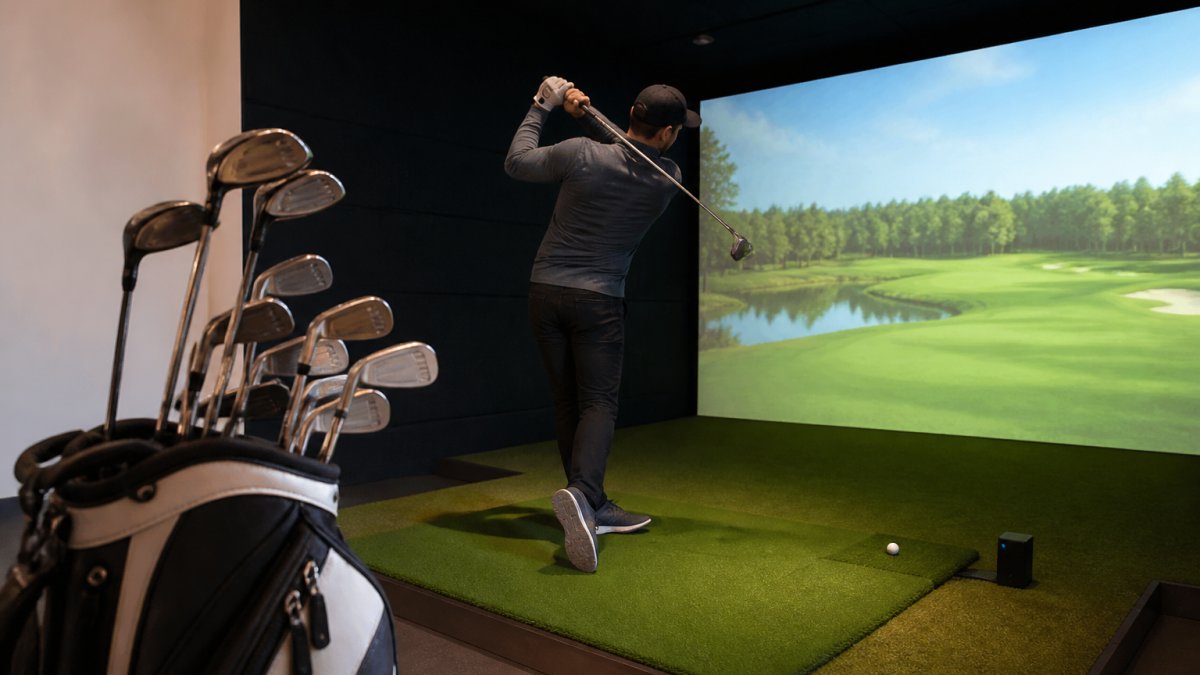
Learning how to improve golf handicap indoors is mostly a math problem, and the math favors repetition. A handicap reflects your best scores, so the fastest way to lower it is to hit more quality reps than your schedule allows outdoors. In Edgewater, NJ, winter shortens the outdoor season, which is exactly why so many local players stall between November and March. This guide from Edge Golf covers the practice structure, drills, and tracking habits that turn indoor sessions into a lower number.
Here is the part most guides get wrong: they treat simulators as entertainment. Used with intent, a launch monitor gives you feedback on club path, face angle, and strike location on every swing, something a range bucket never does. Indoor golf practice removes the biggest variable in improvement, which is guessing.
Build an Indoor Golf Practice Plan That Fits Your Week
The best indoor golf practice plan is short, repeatable, and scheduled, not a weekend marathon. Three 45-minute sessions beat one three-hour session because motor learning responds to frequency. A simple weekly structure looks like this:
| Day | Focus | Duration | Reps |
|---|---|---|---|
| Tuesday | Full swing with one club | 45 min | 40 balls |
| Thursday | Putting and short game | 40 min | 60 putts |
| Saturday | Simulated 9 holes | 60 min | On-course decisions |
Pick one swing thought per session. Two swing thoughts is one too many. Players who rotate through five fixes in a single hour usually leave with none of them.
Golf Simulator Practice Drills That Transfer to the Course
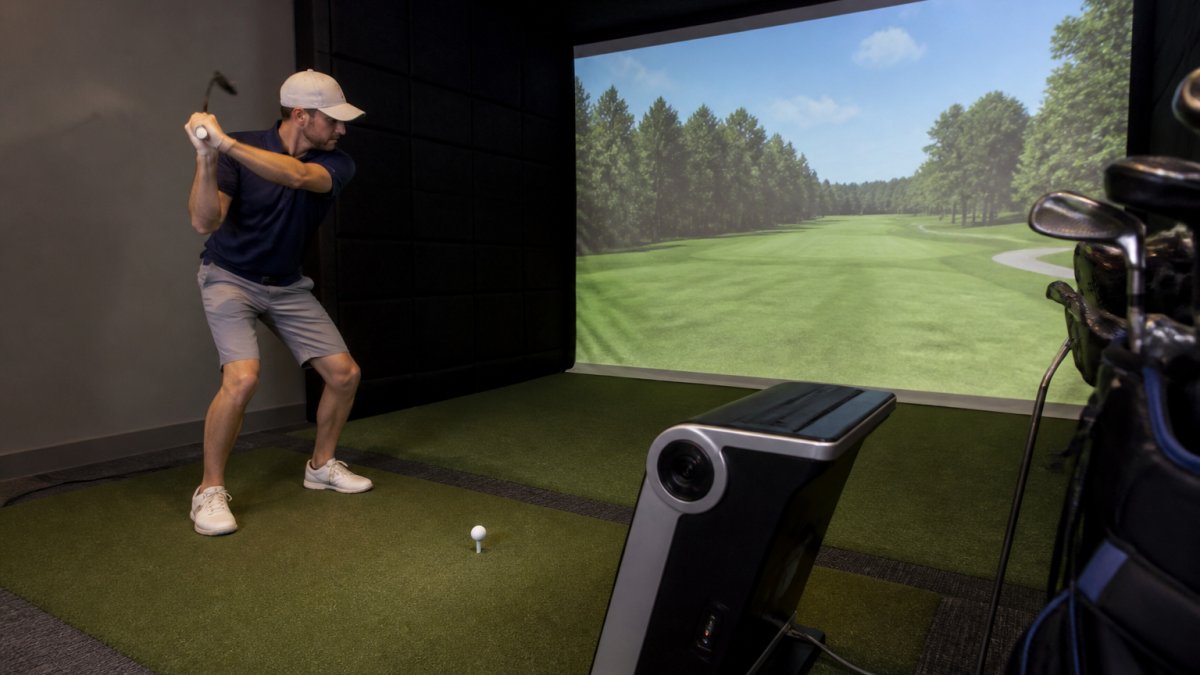
Golf simulator practice drills only transfer when they force you to hit shots you would actually face. Hitting driver for 30 minutes builds a range swing, not a golf swing. Run these three drills instead:
- The 150-yard game: Hit 10 shots to a 150-yard target and score each one by proximity. Track the average, not the best.
- Alternating clubs: Driver, then 8-iron, then wedge, then driver. This mimics real holes and exposes swing changes that only appear when you switch clubs.
- One-shot pressure: Play a simulated par 3 and give yourself one ball. Miss the green and restart the hole.
The USGA handicap system overview rewards consistency, not hero shots. Drills that punish the loose swing are doing you a favor.
Indoor Putting Practice: The Fastest Path to a Lower Handicap
Indoor putting practice is the highest-return hour in golf. Putts make up roughly half your strokes, and a putting stroke is the easiest motion to groove in a small space. Most players spend their indoor time on driver because it feels productive. It is not.
Set up three stations: a straight 6-footer, a breaking 10-footer, and a lag putt from 25 feet. Hit ten at each, record makes and total distance from the hole, then repeat. A putting studio with projected lines and measurable roll shows you face angle at impact, which is the variable that decides most putts inside ten feet.
Golf Simulator Lessons: What PGA Coaching Adds to Your Data
Golf simulator lessons turn raw numbers into a plan. A launch monitor tells you the club path was four degrees out; a PGA-certified instructor tells you why and what to change first. That sequencing matters, because most players fix the symptom and leave the cause untouched.
At Edge Golf, our PGA-certified instructors use high-precision tracking and club fitting to build a baseline, then set measurable targets for each session. If you are searching for indoor golf lessons near me in the Edgewater area, ask two questions before booking: does the coach use ball-flight data, and do they fit clubs to your swing rather than selling a stock set? The PGA of America coaching resources outline what certified instruction should include.
How to Track Progress and Adjust Your Handicap Goal
Track progress with numbers you can compare week to week, not with how a session felt. Log four things after every practice: average proximity to target, putts made from inside ten feet, fairways hit in simulated rounds, and your score on the same simulated course. Re-test on the first session of each month.
Set a handicap goal that is realistic for your practice volume. A player posting two rounds a month with weekly practice typically sees steady movement over a season; a player practicing once a month should expect maintenance, not gains. Adjust the goal when the data plateaus for three straight tests, not after one bad night.
Common Indoor Practice Mistakes That Stall Your Handicap
The biggest indoor practice mistake is treating the bay as a driving range with a screen. Other frequent stalls:
- Hitting the same club for the entire session
- Ignoring the putting studio because it feels less exciting
- Practicing without a target or a recorded result
- Changing swing thoughts every session instead of committing for a month
Conclusion
The challenge with indoor improvement is structure: without a plan, simulator time becomes entertainment and your handicap stays flat. Edge Golf in Edgewater, NJ, was built for the opposite outcome, with six Golfzon simulator bays, a PuttView putting studio, over 300 courses, and PGA-certified instructors who turn your data into measurable progress. VIP members also get priority booking and 1% back on every booking.
Frequently Asked Questions
Can you improve your golf handicap by practicing indoors?
Yes. Indoor practice gives you repeatable conditions, immediate ball-flight data, and no weather delays. A focused indoor golf practice plan built around simulator drills and putting work can lower your handicap because you are rehearsing the same swings and reads week after week. The key is tracking your numbers and adjusting your plan, not just hitting balls. Many players see the biggest gains in driving accuracy and putting consistency within the first two months.
How often should I practice golf indoors to lower my handicap?
Aim for two to three sessions per week, each 60 to 90 minutes. Split the time between full-swing golf simulator practice drills and indoor putting practice. One session can be a structured lesson with a PGA-certified instructor. Consistency matters more than marathon sessions. If you only have 30 minutes, spend 20 on a single drill and 10 on putting. Regular short sessions beat one long weekend session because your body and scoring habits need repetition to stick.
What are the best indoor golf drills for lowering your handicap?
Start with a gate drill for putting, a nine-shot trajectory ladder on the simulator, and a wedge distance-control drill. The gate drill sharpens start line; the trajectory ladder builds control through the bag; the wedge drill tightens your scoring range. Add a driver dispersion drill once a week. These golf simulator practice drills give you measurable feedback, so you know which part of your game needs the next block of practice time.
How can a golf simulator help improve my game?
A simulator shows exact carry distance, ball speed, launch angle, and dispersion after every shot. That turns practice into feedback, not guesswork. You can rehearse approach shots to specific pins, test swing changes, and see how far a miss travels. Golf simulator lessons add a coach who reads the data with you and builds a plan. Over time you learn your real yardages, which is one of the fastest ways to lower a handicap.
What should I practice first on an indoor golf simulator?
Start with your scoring clubs: wedges and putter. Hit ten wedge shots to a target and note your dispersion. Then move to a mid-iron and a driver. Many players spend 70 percent of simulator time on driver, but the handicap drops fastest when you tighten wedge distances and putting. After two weeks, add a full-bag rotation. A PGA instructor can help you set the right order based on your current stats.
Can you practice putting indoors to improve your handicap?
Indoor putting practice is one of the highest-return activities you can do. A putting studio with accurate green-reading technology lets you rehearse start line, speed, and break under repeatable conditions. Ten minutes of gate drills and lag putting three times a week will reduce three-putts. Lower three-putt frequency directly lowers your handicap. Combine it with simulator work so your full swing and putting improve together.
Are indoor golf lessons worth it for beginners?
Yes. Beginners often build flaws in the first few months that take years to undo. Golf simulator lessons give you a coach, video, and data from day one, so you learn grip, setup, and swing path correctly. A short series of lessons plus a simple indoor golf practice plan is more efficient than months of unsupervised range time. Ask about PGA-certified instructors and whether lessons include a written practice plan.
Winter does not have to be a lost season. If you want a practice plan that actually moves your handicap, get started with Edge Golf and book a session with a PGA-certified instructor who will build your baseline and track it with you.